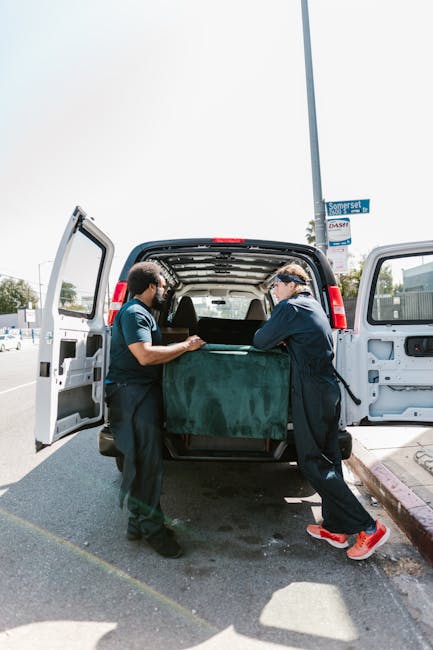
E3 postcode man and van removals cheapest quotes: how to get a low-cost move without nasty surprises
If you are searching for E3 postcode man and van removals cheapest quotes, you are probably trying to solve two problems at once: keep the move affordable, and avoid the usual headaches that come with moving day. Fair enough. Nobody wants a cheap quote that turns into a long, sweaty afternoon of hidden extras, vague timing, or a van that is too small for the job.
The good news is that low-cost removals in E3 do exist, and they do not have to mean cutting corners. In this guide, we will look at how man and van pricing usually works, what affects the final figure, how to compare quotes properly, and how to make a small move smoother from the start. We will also cover the practical stuff that people often overlook, like access, parking, packing, and insurance. A little planning goes a long way here. Honestly, it can be the difference between a tidy job and a messy one.
Why E3 postcode man and van removals cheapest quotes matters
E3 covers a busy part of east London, and that matters because moving costs are often shaped by the realities of the area, not just the distance on the map. Tight streets, flats with stair access, limited waiting space, and local traffic all affect how long a job takes and how simple it is to complete. That means a quote that looks cheap on paper may not be the best value if it ignores access or time on site.
For many people, a man and van service is the sweet spot between hiring a big removal company and trying to do it all themselves. It is usually suited to smaller home moves, single-item transport, student moves, flat moves, and short-notice jobs. If you are moving a sofa from one E3 flat to another, or clearing a few rooms before a bigger house move, this type of service can be a sensible choice.
The phrase "cheapest quotes" can be misleading if you treat it as the only goal. The real aim is usually the best affordable quote: one that stays low, stays clear, and still gives you reliable service. That is the point, really. Cheap is fine. Unclear is not.
In our experience, people often only compare the headline price. But moving costs are affected by labour time, travel, van size, waiting time, loading access, and whether the mover helps with carrying, dismantling, or packing. A slightly higher quote may actually be better if it covers what you need in one go.
How E3 postcode man and van removals cheapest quotes works
A man and van quote is normally based on a few core details. You tell the mover what needs moving, where it is going, how much help you need, and when you want it done. They then estimate the time, vehicle size, and crew required. Simple enough in theory. In practice, the details matter a lot.
Most affordable quotations are shaped by these factors:
- Volume of items: one sofa and a few boxes cost less than a full flat.
- Distance: local E3 jobs are usually cheaper than multi-stop or cross-London trips.
- Access: stairs, lifts, long carries, and no-parking areas can all add time.
- Timing: evenings, weekends, month-end, and short notice can be priced higher.
- Service level: just transport, or loading and unloading too?
- Special items: pianos, fragile furniture, heavy wardrobes, and awkward items may need extra care or specialist handling.
Some providers work on an hourly rate, others offer a fixed quote, and some use a mix of both. For cheaper quotes, a clear fixed estimate is often easier to compare. Hourly pricing can be good value for small jobs, but only if the job is straightforward and the access is good. If there are delays, parking issues, or a lot of carrying up and down stairs, the clock can start to bite.
If you want to reduce the chance of add-ons, it helps to be specific from the start. Mention everything. The chest of drawers in the hallway. The mirror leaning against the wall. The fact that your flat is on the third floor and the lift has a mind of its own. Small details save money later. Strange but true.
Key benefits and practical advantages
The appeal of man and van removals is not just price. It is flexibility. You can often book for a smaller job without paying for a large removal team and a big lorry you do not need. For many E3 moves, that is exactly the right balance.
Here are the main benefits people usually notice:
- Lower cost for smaller moves: ideal if you are not moving a whole house.
- Flexible booking options: useful for last-minute plans or awkward schedules.
- Better fit for local jobs: especially if you are moving within E3 or nearby east London.
- Less waste: you are not paying for unused vehicle space.
- Faster for simple transport jobs: a single van and driver can be a lot more efficient than a larger crew.
- Good for mixed jobs: furniture pick-ups, student moves, storage transfers, and flat clears.
There is also a practical benefit that gets overlooked: simpler logistics. When the move is small, a man and van service can feel calmer. Less people, less kit, fewer handovers. You know who is arriving, what the job is, and roughly how long it should take. That sort of clarity is worth something.
For bigger moves, though, a man and van may not be the cheapest overall if you need multiple trips or lots of labour. Cheap on the front end can become expensive once the day starts running long. That is why matching the service to the job matters so much.
Who this is for and when it makes sense
This kind of service suits people who want a straightforward move without the scale of a full removal operation. The most common users are:
- flat movers in E3 who only have a few rooms of furniture
- students moving between accommodation and storage
- renters doing a local move at the end of a tenancy
- people buying or selling a few items privately
- small businesses shifting stock or office equipment
- families who need help with bulky items before or after a larger move
It also makes sense when timing is tight. Maybe you have a handover at 10 a.m. and need everything out before then. Or maybe a sofa is being delivered, but the seller cannot help carry it upstairs. A man and van can handle those awkward, everyday jobs without a big production around them. Let's face it, not every move needs a convoy.
That said, if your move involves a large family home, lots of fragile items, or specialist furniture, you may be better off combining man and van support with extra services such as packing and boxes or even looking at broader removals support. Choosing the right level of help is often what keeps the price sensible.
Step-by-step guidance
If you want the cheapest quote that still feels safe and sensible, work through the process in order. Rushing the quote stage is where people lose money.
- List everything that needs moving. Include furniture, boxes, awkward items, and anything that needs disassembly.
- Check access honestly. Note stairs, lifts, narrow hallways, parking restrictions, and long walking distances from van to door.
- Decide what help you need. Do you want load-and-unload help, or just transport?
- Choose your timing carefully. Midweek and mid-month can be more flexible than Fridays or month-end.
- Ask for a quote that includes the basics. Clarify waiting time, fuel, mileage, and any extra labour charges.
- Compare more than one option. The cheapest quote is not always the best value if it is vague.
- Confirm insurance and process. Check that the mover has sensible cover and clear terms.
- Prepare the items before collection. Ready-to-load belongings reduce labour time, which helps keep costs down.
A quick example: if you are moving a few pieces from an E3 flat to storage, a quote can stay surprisingly low when boxes are packed, furniture is ready, and parking is sorted. The same move can become annoying and expensive if the team arrives to find items still being wrapped while the lift is occupied and the nearest legal stop is two streets away. That is how little things snowball.
A useful side note: if you are moving into storage rather than straight into a new home, it may be worth looking at storage options alongside the removal plan. Storing items properly can reduce repeat trips and save time overall.
Expert tips for better results
There are a few small habits that consistently lead to better quotes and smoother moves. Nothing flashy. Just the stuff that keeps the day under control.
- Be accurate with item counts. A "few boxes" can mean five boxes or twenty-five. That difference matters.
- Send photos if asked. Visuals help the mover understand staircases, furniture size, and awkward access.
- Separate essentials. Keep documents, chargers, keys, and one bag of daily items with you.
- Disassemble obvious flat-pack items in advance. Beds and tables often move faster once broken down.
- Label boxes clearly. It speeds unloading and helps avoid furniture blocking the wrong room.
- Book as early as you reasonably can. Last-minute work is possible, but cheap quotes are easier to secure with a bit of notice.
- Use the right service type. If you only need a van and driver, do not pay for more than that. If you need more hands, say so upfront.
There is one other thing worth mentioning. People sometimes ask for the cheapest possible quote and then quietly add on "just one more item" or "just a quick extra stop." A small change can be fine, but it should be priced honestly. Being upfront from the beginning is the simplest way to keep trust on both sides.
If you want to review the company's wider approach to pricing and deposits, it is sensible to read the pricing and quotes page and the payment and security information before booking. That kind of due diligence is boring, yes, but useful.
Common mistakes to avoid
Cheapest quotes become expensive when the details are missed. These are the mistakes that crop up again and again.
- Hiding access problems: if there are four flights of stairs, say so.
- Underestimating volume: the van must fit the load in one go if you want value.
- Ignoring parking: bad parking can delay the move and increase the bill.
- Forgetting specialist items: pianos, mirrors, and oversized wardrobes need the right handling.
- Choosing only on headline price: the lowest number can come with the least clarity.
- Leaving packing until the last minute: chaos tends to cost more than it should. It always does.
- Not checking terms: cancellation, waiting time, and overtime rules matter more than many people think.
Another common issue is confusion between "cheap" and "rushed." A rushed job can look inexpensive at first, but if the mover is in a hurry and your items are not ready, you may end up paying for inefficiency in one form or another. Better to slow the planning down a touch and speed the move up on the day.
Tools, resources and recommendations
You do not need fancy tools for a small move, but a few practical resources make a real difference:
- Box count list: a simple note on your phone or paper list works fine.
- Photo inventory: pictures of large furniture, stairs, and access points help with accurate quoting.
- Room-by-room packing plan: keeps your boxes grouped and avoids last-minute panic.
- Tape, labels, and markers: not glamorous, but extremely useful.
- Measuring tape: helps confirm whether bulky items will fit through doors or into lifts.
If you are moving out of a flat, the service pages for flat removals and man and van can be useful starting points when you are deciding how much help you actually need. For household moves with more furniture, home moves and house removals may be a better fit.
For trade-offs between budget and support, many readers also compare removal van options with a broader removal services approach. That comparison can help you decide whether you need a simple transport-only job or something more hands-on.
Law, compliance, standards and best practice
When you book any removals service in the UK, especially in a busy place like E3, basic compliance and safety matter. You do not need to become a transport expert, but it helps to know the basics.
Best practice usually includes the following:
- Insurance awareness: ask what is covered, particularly for loading, transit, and unloading.
- Clear terms: understand cancellation, delays, and waiting time rules before you book.
- Safe lifting: heavy or awkward items should be handled carefully, not yanked through a doorway like a scene from a comedy.
- Vehicle suitability: the van should be appropriate for the load, not just "about right."
- Responsible disposal: if furniture is being removed for disposal, recycling and sustainability should be considered where practical.
For that reason, it is worth checking pages such as insurance and safety, health and safety policy, terms and conditions, and recycling and sustainability. These are not just formalities. They tell you a lot about how a company operates when things are slightly less than perfect, which is usually when you learn the most about them.
If the move includes office items or business stock, then commercial moves and office removals are the more relevant categories. For individual bulky furniture, furniture removals or even furniture pick up may be the cleaner option.
Options, methods and comparison table
If you are trying to find the most affordable route, it helps to compare the main approaches side by side. The "right" choice depends on the size of the job, not just the price tag.
| Option | Best for | Typical strengths | Possible drawbacks |
|---|---|---|---|
| Man and van | Small to medium local moves, single items, flat moves | Flexible, usually cheaper, simple to book | May not suit larger households or heavy lifting jobs |
| Removal van hire with driver | Transport-focused jobs where you want low cost | Good value when packing is already done | Less hands-on support if you need loading help |
| Full removals service | Larger homes, more furniture, more fragile items | More support, better for complex moves | Usually costs more than a basic van service |
| Same-day removals | Urgent or last-minute moves | Fast response, helpful in a pinch | Availability can be limited and pricing may be higher |
In practical terms, if your goal is the cheapest quote, the man and van option is often the first place to look. But if the job is more complex than it first appears, the cheaper option on paper can become the dearer one by the end of the day. A half-packed flat, two flights of stairs, and a narrow parking bay can do that to a quote very quickly.
For urgent moves, it may also be worth checking same day removals. For student life and term-time moves, student removals is often the most relevant category. And for awkward specialist work, piano removals is there for a reason. Pianos do not forgive guesswork.
Case study or real-world example
Picture a typical E3 move on a rainy Thursday morning. A renter is leaving a one-bedroom flat near a busy road, with a sofa, a bed frame, a dining table, six boxes, and a couple of bags of mixed household bits. Not a huge move, but enough to be awkward if not handled properly.
At first glance, the client wants the cheapest possible quote. Fair enough. But after going through the details, it becomes clear the lift is unreliable, the building has a narrow entrance, and parking is limited close to the door. The mover suggests a van with help for loading and unloading, plus a clear time estimate. The client also packs boxes the night before and dismantles the bed frame in advance. That small bit of prep matters.
The result? A smoother move, less time spent waiting, and fewer chances for extra charges. The cheap quote was still the goal, but it was only possible because the job was described properly. That is usually the pattern. Cheap works best when the move is tidy on both sides.
On the flip side, I have seen simple jobs become frustrating because someone assumed a "few items" would fit into a small van when in reality the load included a wardrobe, a chest of drawers, and half a kitchen's worth of boxes. Not ideal. Nobody enjoys doing an extra trip across east London at the end of a long day.
Practical checklist
Use this checklist before you request or accept a quote. It is simple, but it keeps mistakes down.
- List all items clearly, including bulky and fragile pieces
- Measure large furniture if space is tight
- Note floor level, lift access, and stair count
- Check parking and loading access near both addresses
- Confirm whether help with lifting is included
- Ask if the quote is hourly or fixed
- Clarify waiting time, overtime, and extra-stop charges
- Pack and label boxes before the moving team arrives
- Keep essentials separate
- Review insurance, terms, and safety information
- Book a time that gives you breathing room, not panic
Expert summary: the cheapest quote is usually the one that is most accurately scoped. The clearer you are about access, volume, timing, and labour, the less likely it is that a "low price" turns into a costly day of improvisation.
If you are still comparing your options, it is worth looking at the company background on about us and the booking process on pricing and quotes. Trust matters here, even for a small move.
Get a free quote today and see how much you can save.
Conclusion
Finding E3 postcode man and van removals cheapest quotes is not really about chasing the lowest number. It is about getting a fair price for a move that is planned properly, described honestly, and handled without drama. Once you focus on the real variables - access, item volume, timing, and the level of help you need - the right quote becomes much easier to spot.
The best cheap quote is the one that still feels sensible after the job is done. Clear, tidy, and no surprises. That is what people remember. And, to be fair, that is what most of us want when boxes are stacked in the hallway and the kettle is already packed away.
If you need a little extra help beyond the move itself, you can also explore related services like packing and unpacking services, removal truck hire, or man with a van depending on how simple or complex your move is. The main thing is to choose the option that fits the job, not the other way around. A bit of clarity now saves a lot of stress later, and that is never wasted.
Frequently Asked Questions
What is the cheapest way to move in E3?
For smaller loads, a man and van service is often the cheapest practical option because you only pay for the vehicle and help you actually need. The price stays lower when the job is local, the items are packed, and access is easy.
How do I get the lowest man and van quote without hidden extras?
Give a full list of items, explain access clearly, and confirm whether the quote is fixed or hourly. Ask about waiting time, stairs, parking issues, and extra stops before you book.
Is a man and van suitable for a flat move in E3?
Yes, especially if you are moving from a studio or one-bedroom flat, or if you do not have a huge amount of furniture. For many local flats, it is the most cost-effective choice.
Are weekend removals more expensive?
They can be, depending on demand and availability. If your schedule is flexible, midweek and mid-month moves are often easier to price well.
Do I need to pack everything before the van arrives?
Ideally, yes. Pre-packed boxes reduce labour time and lower the chance of delay. It also makes the move feel a lot calmer, which is worth something in itself.
What if my building has no lift?
Tell the mover in advance. Stairs take longer and can affect the quote, but being honest upfront is the best way to avoid awkward surprises later.
Can I book same-day man and van removals in E3?
Sometimes, yes. Availability depends on the day and how busy the schedule is. If you need something fast, look at same day removals as a relevant option.
Is insurance important for a small move?
Yes. Even small jobs involve lifting, transport, and tight spaces. It is sensible to check the provider's insurance and safety information before you commit.
What kind of items are best suited to man and van removals?
Boxes, furniture, student belongings, small home contents, and general household items are all common. For very heavy or awkward items, such as pianos, specialist handling may be more appropriate.
How many quotes should I compare?
Usually two or three is enough if the quotes are detailed and comparable. Too many options can be confusing, especially when each one is priced in a slightly different way.
What should I do if I need storage as part of the move?
Consider whether the removals plan and the storage plan should be booked together. That can save time and reduce repeat handling, especially for temporary moves or in-between housing.
Are cheap quotes a bad sign?
Not at all. A cheap quote can be perfectly genuine if the job is small and clear. The warning sign is not low price itself; it is lack of detail, vague terms, or a quote that avoids answering basic questions.